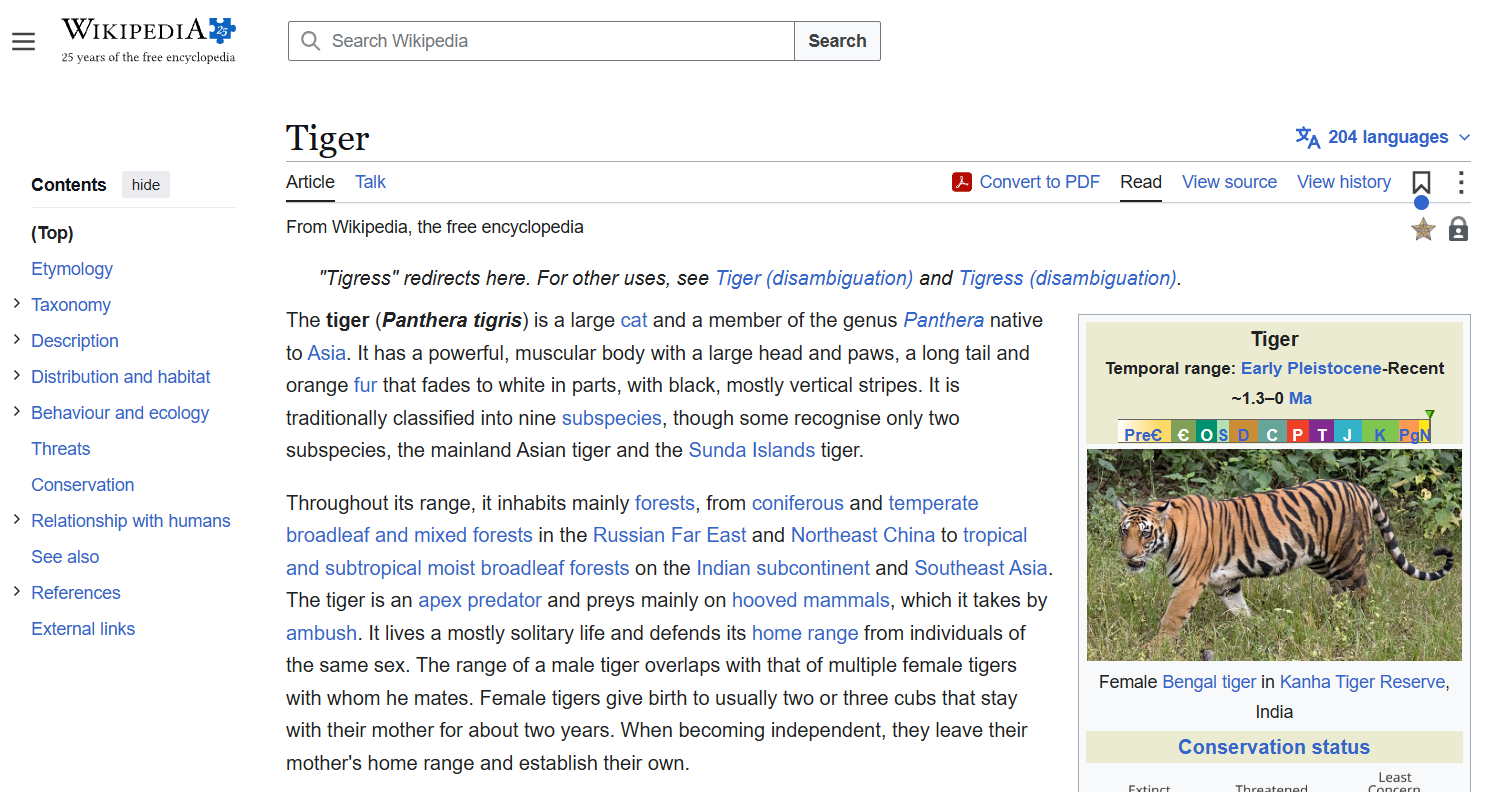
That is a short 9000-word wikipedia article about the tiger.
This is considered to be the (or a) definitive scholarly text on tigers.
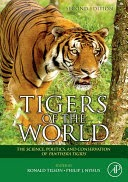
Tigers of the World: The Science, Politics, and Conservation of Panthera tigris (edited by Ronald Tilson and Philip J. Nyhus)
It’s about 240000 words, 552 pages, Times New Roman 10 point, single spaced.
Let’s put to the side the very important point that in our scientific materialist era, this book probably does not even open the question of ‘what it feels like to be a tiger’. (Which if it were addressed competently would probably make the book 20 or 30 times as long.) Let’s just stay within the narrow confines of what we, in today’s era, consider a competent description.
Now imagine that you, I, or the average person encountered a tiger and were asked about the experience.
A large proportion of what many of us would say would have much more to do with ourselves than with the tiger. And it probably wouldn’t require 300 words, not to mention 9000 or 240000.
‘Its relationship to ME’ or ‘Its view of ME’ is both 1) a very practical and useful question to use when navigating the world and 2) an incredibly narrow window through which to view anything in the world.
(This is part of the subtext of that popular movie Obsession, I think.)
Imagine an account of what you are, or what a human is, written by a mosquito. ‘Some of them are a bit sweet. Make sure to get them in the summer when they get out of their cars. Occasionally, they are good for 4 or 5 meals.’
What? Nothing about my childhood? My first love? My dreams of the future? What about my values?
Nah. More like: ‘best sampled between 7 and 19 years of age…with a bit of sweat for garnish. Avoid ones carrying spray bottles.’.
If when I look at someone, I focus mainly on how they see me, I’m a little closer to that mosquito.
Understandable, but a bit sad.
The ego is a miraculous organizing principle.
But egocentrism? Kind of imprisoning.