Nihil Me Terret Quam Fortissimus

Listening Schedule

Emperor | Nov 2023
Once a month | 15 minutes
Khan | Stage IV | Jan-2024
Once a month | 15 minutes
Cycle V | Thunder

One day you’ll understand… I didn’t train you to fight the world, but to walk through it with courage.

Many believe that training is about preparing for battle, about learning to strike harder, move faster, and conquer opponents. And yes, technique and strength are taught—but that is only the beginning. True training is not about who you can defeat, but about who you become in the process. I did not teach you to fight the world because the world is not an enemy to be destroyed. The world is a challenge, a mirror, and a test of character.

I trained you to move through life without fear. To stand tall when uncertainty rises. To breathe steadily when chaos swirls around you. To maintain clarity when others panic and to act decisively when hesitation could cost more than courage. A punch thrown in anger may win a moment, but courage will carry you through decades.

I trained you to face failure without shame, to accept setbacks as lessons, and to rise each time stronger than before. I trained you to see conflict not as a call to violence, but as a call to discipline and discernment. The strength in your limbs is nothing compared to the strength in your mind, your spirit, and your resolve.

Walking through the world with courage does not mean never being afraid. Fear will always appear—it is natural, it is human—but courage is the decision to move forward despite it. To speak when silence tempts you. To act when doubt holds you back. To protect what matters without being consumed by what does not.

One day you will look back and realize that the lessons I taught you were never about defeating someone else. They were about mastering yourself: your mind, your heart, and your will. And when you walk through the world with that mastery, no obstacle will be too great, no challenge too daunting, and no fear strong enough to stop you.

Remember this always: a warrior’s greatest victory is not measured in battles won, but in the courage to walk through life fully alive, fully aware, and unbroken.
Listening Schedule

Emperor | Nov 2023
Once a month | 15 minutes
Khan | Stage IV | Jan-2024
Once a month | 15 minutes
Cycle V | Thunder

“Why do you train more now than before?”

Because the older I get, the more I realize how much I still need it.

When we are young, we often train to prove ourselves—to impress, to compete, to test our limits in visible ways. Back then, the goal seems external: to be stronger, faster, better than those around us. But as the years pass, the world teaches a different lesson. We begin to understand that strength is never a destination. Knowledge is never complete. Mastery is never final.

With age comes clarity: every day that passes is a reminder of our own limits, of how quickly weakness can return, and how fleeting physical prowess can be. Training is no longer about showing what you can do; it is about preserving what you have learned, refining what you thought was finished, and fortifying the mind and body against the subtle decay of complacency.

I train more now because life has taught me humility. Every lesson I thought I mastered, every skill I thought was sharp, reveals cracks when tested by experience, time, or unforeseen challenge. I train not to conquer others, but to conquer myself: my doubts, my excuses, my fatigue, my distractions. I train to remember who I am, and who I still have the potential to become.

The older I get, the more I see that the true opponent is not someone across the ring, but the version of myself that would settle, that would grow lazy, that would stop striving. And the only antidote to that quiet surrender is discipline. Training is the bridge between who I am today and who I can still become tomorrow.

So I train more now than before—not because I am weaker, but because I understand the fragility of strength. Not because I have reached the peak, but because the mountain has only grown taller. And the more I learn, the more I see just how far I still have to go.

Because in the end, growth is endless, mastery is an illusion, and the need for training never truly disappears.

Listening Schedule

Emperor | Nov 2023
Once a month | 15 minutes
Khan | Stage IV | Jan-2024
Once a month | 15 minutes
Cycle V | Thunder

“If you fear sparring, you don’t trust your training.”

Fear is natural—it is the body’s way of warning you, preparing you, sharpening your senses. But fear can also be a mirror, reflecting doubt where confidence should live. In martial arts, sparring is not simply an exercise in attack and defense; it is a test of everything you have built through hours, days, and years of practice. Every stance, every block, every strike is a promise you have made to yourself. Fear arises when you begin to question whether you can keep that promise.

To fear sparring is to doubt the very work you have invested so diligently. It is to underestimate the countless repetitions that have honed your reflexes, to discount the sweat that has strengthened your body, and to forget the lessons that have sharpened your mind. Sparring does not exist to intimidate you; it exists to reveal the truth of your training. If you step onto the mat without trust, you are not learning—you are hesitating. You are allowing fear to dictate the outcome of a test you have already prepared for.

Trusting your training means more than believing in your technique. It means believing in your discipline, your patience, your persistence, and your ability to adapt under pressure. It means understanding that mistakes will come, but that every mistake is an opportunity to learn rather than a reason to retreat. It means knowing that fear is temporary, but skill—earned skill—is permanent.

A practitioner who trusts their training approaches sparring with calm focus, not reckless aggression, not hesitation, but a steady awareness. Every movement flows from confidence, every decision from clarity. When fear appears, it is acknowledged, observed, and then released, because the mind that trusts the body does not allow doubt to control it.

Remember this: sparring is not the battlefield—it is the mirror. It shows the strength of your technique and the strength of your mind. Fear will always appear in some form, but true mastery begins when you realize that fear does not mean you are unprepared—it means you are human. And in that moment, trust in your training becomes your weapon, your shield, and your path to growth.

If you fear sparring, it is not the opponent you doubt—it is yourself. And once you learn to trust yourself, fear no longer dictates the fight.

Listening Schedule

Emperor | Nov 2023
Once a month | 15 minutes
Khan | Stage IV | Jan-2024
Once a month | 15 minutes
Cycle V | Thunder

They trained to understand karate, not to advertise it.

Greatness is not measured by recognition, fame, or accolades. It is measured by mastery—the relentless pursuit of truth, precision, and self-understanding. The founders of martial arts did not seek the applause of the crowd. They did not train to be admired. They trained to know themselves, to understand the body, the mind, and the spirit, and to uncover the principles that govern motion, balance, and combat.

True mastery begins with humility. The founders spent countless hours perfecting techniques, refining movements, and internalizing principles that often went unnoticed by others. Their goal was not to impress spectators or to collect trophies, but to achieve clarity. They sought knowledge of the art itself, not the praise that might follow from its display. Every strike, every block, every kata was a lesson in discipline, patience, and self-control.

They understood that karate is not a performance—it is a journey. The art does not exist for vanity or showmanship; it exists to forge character, sharpen the mind, and prepare the spirit for life’s inevitable battles. When the founders trained, they trained in silence, in solitude, and in dedication, knowing that true understanding could not be faked or rushed. Recognition is fleeting, but knowledge is eternal.

They also understood that the greatest impact is not made through words or public demonstration, but through example. Their actions spoke louder than their claims. Their mastery attracted disciples not because of ego or advertising, but because truth always draws those who are ready to learn. To train for understanding is to train for life itself—it is to cultivate a skill that transcends the dojo, that shapes decisions, and that guides conduct both in combat and in character.

In the end, what made the founders great was not the number of people who knew their name, but the depth of understanding they achieved, the lives they quietly transformed, and the timeless legacy they left behind. They trained for themselves first, and through that dedication, they trained the world without ever needing to announce it.

Greatness lies not in being seen, but in being understood—and the founders of karate understood this better than anyone.

Listening Schedule

Emperor | Nov 2023
Once a month | 15 minutes
Khan | Stage IV | Jan-2024
Once a month | 15 minutes
Cycle V | Thunder

“The world will try to shake you… but you decide if you fall.”

Life is not gentle. The world is full of storms—unexpected challenges, harsh criticism, betrayal, failure, and loss. It will test your patience, question your purpose, and push you to your limits. At times, it will strike with a force that seems impossible to withstand. It will try to make you doubt yourself, abandon your path, or surrender to fear.

But remember this: while the world can strike, it cannot control your will. It cannot choose your response, it cannot dictate your resilience, and it cannot claim the spirit that lives within you. The power to rise—or to fall—always lies in your hands. Strength is not measured by the absence of struggle, but by the courage to endure, to stand firm, and to keep moving even when the ground beneath you trembles.

Falling is a choice, not a requirement. When life shakes you, you may stumble, you may waver, but you do not have to give in. You decide if the hardships define you or refine you. You decide whether the blows of circumstance become the chains that bind you or the fire that forges you. Every challenge is a test, not of the world’s strength over you, but of your strength within yourself.

To stand unshaken is not to deny fear, pain, or doubt. It is to face them squarely, acknowledge their presence, and then act anyway. The storms of life will come again and again—but each time, you learn, you adapt, and you grow. Your mind becomes sharper, your spirit becomes steadier, and your resolve becomes unbreakable.

The world may try to shake you, but falling is never inevitable. Strength is cultivated in the moments when you choose to rise despite adversity, when you refuse to surrender, and when you make the conscious decision to keep your balance in the face of chaos.

The world may try to move you—but only you control whether you stand, stumble, or rise stronger than ever before.

Listening Schedule

Emperor | Nov 2023
Once a month | 15 minutes
Khan | Stage IV | Jan-2024
Once a month | 15 minutes
Cycle V | Thunder

“What if I’m not strong enough for this?”

Strength comes last. Showing up comes first.

Many believe that courage is born from strength, that preparation is only valid once we feel ready, and that the first step must be taken only when we are certain we can endure. But the truth is the opposite: strength is forged in the act of facing what you thought you could not. It is born in motion, in commitment, and in the willingness to step forward even when fear screams that you are not enough.

Showing up is the foundation of every victory. It is the moment you refuse to let doubt control you. It is the choice to meet the challenge, to stand on the edge of the unknown, and to risk failure in pursuit of growth. Without showing up, strength remains nothing more than potential, idle and untested. It is through action—through facing discomfort, uncertainty, and struggle—that power and resilience are truly cultivated.

Every master, every warrior, every person who achieved greatness began with the same question: “Am I strong enough?” And every one of them discovered the same answer: they were not—yet. But by showing up, by committing to the journey despite their fears, they became strong in ways that preparation alone could never have achieved. Strength is not the prerequisite for courage; it is the reward of it.

When you show up, you confront more than the task at hand. You confront doubt, hesitation, and the voice inside that whispers “you can’t.” You confront your limits—and then you push past them. You discover muscles you never knew you had, patience you never imagined, and courage you never believed could exist inside you. Every challenge becomes a forge, and every act of presence becomes the hammer that shapes your strength.

So do not wait until you feel ready. Do not wait until you are “enough.” Show up. Step forward. Face the challenge. Strength will follow—not immediately, not perfectly, but inevitably. And with each step, you will discover that you were stronger than you imagined, not because you began strong, but because you had the courage to begin.

Strength comes last. Showing up comes first. And the act of showing up is what creates the strength you need to endure, overcome, and triumph.

Listening Schedule

Emperor | Nov 2023
Once a month | 15 minutes
Khan | Stage IV | Jan-2024
Once a month | 15 minutes
Cycle V | Thunder

Martial arts training is far more than a method of self-defense — it is a lifelong investment in the health and harmony of the mind, body, and spirit.
Through consistent practice, martial arts cultivate physical strength, resilience, and coordination, but the benefits reach far deeper than the surface. They sharpen mental focus, build emotional balance, and encourage a spirit of humility and respect.

More than learning techniques or mastering forms, martial arts teach discipline, patience, and perseverance. Every challenge, whether it is perfecting a movement or pushing through fatigue, becomes an opportunity for growth. Over time, practitioners develop a quiet confidence rooted not in aggression, but in self-awareness and inner stability.

In this way, martial arts become a holistic path to personal transformation. They shape character, strengthen the body, and elevate the spirit, guiding individuals toward a more focused, balanced, and empowered life. The true essence of martial arts is not found only in combat — it is found in the ongoing journey of becoming the best version of oneself.

Listening Schedule

Emperor | Nov 2023
Once a month | 15 minutes
Khan | Stage IV | Jan-2024
Once a month | 15 minutes
Cycle V | Thunder

World Shotokan Karate
Six major karate styles - Style Key Characteristics
Shotokan Known for deep stances and powerful, linear movements for long-range techniques.

Kyokushin A full-contact style with rigorous conditioning and realistic sparring.

Shito-Ryu Blends hard and soft Okinawan styles, focusing on speed and a variety of kata.

Wado-Ryu Incorporates jujutsu principles, emphasizing body shifting and evasion.

Shorin-Ryu An older Okinawan style using natural postures and avoidance techniques.

Goju-Ryu Combines hard, linear attacks with soft, circular movements for close-range combat.

All these styles share the core philosophy of karate-dō, focusing on self-improvement and self-defense.

Listening Schedule

Emperor | Nov 2023
Once a month | 15 minutes
Khan | Stage IV | Jan-2024
Once a month | 15 minutes
Cycle V | Thunder

Practicing martial arts offers a powerful range of benefits that strengthen physical health, sharpen mental abilities, and deepen spiritual well-being. These benefits arise from the unique blend of physical training, mental discipline, and ethical principles that most martial arts systems are built upon.

Mind

Martial arts training is a catalyst for enhanced mental performance and emotional stability.

Memory Retention & Problem-Solving:
Studies show that consistent martial arts practice can positively influence brain function, improving memory, learning capacity, and cognitive flexibility. Grappling arts especially are often compared to “human chess,” requiring practitioners to think several steps ahead, strategize under pressure, and adapt instantly to an opponent’s movements.

Confidence & Self-Control:
As students progress in skill and rank, they develop a deep sense of accomplishment and self-belief. This structured, disciplined environment also teaches emotional regulation — learning to stay calm, composed, and focused even under stress.

Focus & Adaptability:
Martial arts demand unwavering concentration and attention to detail. These mental habits naturally transfer into academic, professional, and everyday settings. Training also builds adaptability, helping practitioners respond creatively and resiliently to unexpected challenges.

Body

The physical dimension of martial arts offers a full-body workout that promotes longevity, strength, and mobility.

Balance & Coordination:
Precise movements, footwork patterns, and controlled stances enhance body awareness, stability, and overall coordination.

Flexibility & Muscle Tone:
Stretching routines, repetitive drills, and dynamic techniques increase flexibility and range of motion while toning muscles throughout the body.

Endurance & Cardiovascular Health:
The high-intensity nature of martial arts — from striking combinations to grappling exchanges — improves cardiovascular fitness, lung capacity, and overall stamina.

Spirit

Beyond physical and mental development, martial arts cultivate character, purpose, and inner strength.

Patience & Perseverance:
Progress in martial arts is a gradual, long-term journey. Students learn to embrace challenges, push through plateaus, and stay committed to continuous improvement.

Respect & Humility:
Most martial arts traditions emphasize respect — for instructors, training partners, the art itself, and oneself. This practice fosters humility and awareness of one’s place in a larger community.

Integrity & Honor:
The ethical framework of martial arts promotes honesty, responsibility, and strong moral character. Practitioners learn to carry these principles with them both inside and outside the dojo.

Listening Schedule

Emperor | Nov 2023
Once a month | 15 minutes
Khan | Stage IV | Jan-2024
Once a month | 15 minutes
Cycle V | Thunder

A weak man waits for the storm to pass, hoping the winds calm and the world becomes gentle before he dares to move. He stands still, seeking comfort, letting fear and uncertainty dictate his steps.

But the alpha is different.

An alpha walks straight into the storm — not because he is fearless, but because he has learned to master his fear. He understands that growth lives inside the turbulence, that strength is formed in the struggle, and that the only way forward is through the chaos, not around it.

He is excited by the challenge, fueled by the unknown, and energized by the pressure that would break lesser men. He does not crumble. He does not retreat. His spirit remains unshaken, his purpose unbroken.

Where others see danger, he sees opportunity. Where others stop, he advances. In the storm’s roar, he finds his own power.

An alpha is not defined by dominance, but by resilience — by the ability to keep moving, keep fighting, and keep believing, even when the sky turns dark. He becomes the kind of man who inspires others to rise, not by avoiding adversity, but by showing how to stand tall within it.

The storm shapes the weak. The alpha shapes the storm.

Listening Schedule

Emperor | Nov 2023
Once a month | 15 minutes
Khan | Stage IV | Jan-2024
Once a month | 15 minutes
Cycle V | Thunder

Other than Tai Chi, there are few men and women too who still practice martial arts and they even spar.
Old men in karate don’t slow down —
they simply strike at a pace that makes the lesson linger.
Their power isn’t in speed anymore, but in precision, wisdom, and the kind of impact you feel long after the moment has passed.
They don’t hit you harder… they hit you smarter.

Listening Schedule

Emperor | Nov 2023
Once a month | 15 minutes
Khan | Stage IV | Jan-2024
Once a month | 15 minutes
Cycle V | Thunder

Karate basics are often misunderstood. What we commonly call “blocking techniques” are usually interpreted as literal blocks—movements meant simply to stop an incoming attack.

But if you stop at that idea, you miss almost everything your karate is trying to teach.

Some practitioners believe that training large, exaggerated movements first—and then “shrinking” them later—is a smarter approach than what they call the “sledgehammer” style.
But the body doesn’t care about tradition or clever theories. It adapts to exactly what you train.

The specificity principle in motor learning is clear: your nervous system adapts to the precise movements you practice. Big, exaggerated motions create adaptations for big, exaggerated motions. They do not automatically convert into sharp, efficient actions under pressure.

Henneman’s size principle reinforces this: small, refined movements and large, gross movements recruit different motor units. Training only the “big version” doesn’t prepare you for the subtlety, timing, and speed required in real application.

Kata were never designed to showcase literal blocks. Many techniques share similar trajectories and serve multiple purposes. What appear to be “large movements” often exist because tradition formalized them visually over time—textbooks and instructors emphasized the shape rather than the function. Students copied the form without understanding the intent.

The result: generations of karateka repeating an inherited misunderstanding.

If a block were truly a block, it would be a “second syllable” to the punch’s “first syllable.” The attack always arrives first; the so-called block arrives second. Relying on the second to stop the first means you’re always late.
The initial movement must meet, redirect, or control the attack. There are no passive arms in karate. Every action has purpose—often more than one.

Karate is about function, not tradition for tradition’s sake. Misreading kihon leads to misreading your karate, and that distorts everything. Training must reflect the intent and context of the movement—not a mistaken idea of blocks or exaggerated practice. Under pressure, only what you have actually trained will ever show up.

Context is everything.
If you train for competition, aesthetics, fitness, or fun, none of this is a problem. But if you want your karate to protect you when it matters, you must stop believing that the basics are “just basics.” They are fundamental, but their application is anything but simple. You must look inside each movement and ask what it is for, why you are doing it, and how your practice aligns with that purpose.

Start thinking for yourself. Too many people try to force a non-practical version of karate into a practical role, and that’s why the confusion never ends. Stop accepting that version—it won’t work.

This is where tradition and reality finally part ways. The inherited shapes are not the reality you face when someone grabs you, swings at you, or tries to hurt you. Context determines outcome.
When tradition is misunderstood, it becomes decoration.
When context is understood, it becomes protection.

Listening Schedule

Emperor | Nov 2023
Once a month | 15 minutes
Khan | Stage IV | Jan-2024
Once a month | 15 minutes
Cycle V | Thunder

Swimming upstream to their spawning grounds takes an enormous amount of energy out of a salmon—so much that many never complete the journey. But this struggle is not a failure. It is the price of becoming what they were meant to be.
And in this, there is a lesson every martial artist should understand.

Martial arts is not the path of drifting with the current. It is not the path of ease, comfort, or convenience. It is the path of turning toward the resistance, meeting it head-on, and using the challenge itself as the force that shapes you.

Just as the salmon pushes against the river’s power, the martial artist pushes against their own limitations: fatigue, doubt, pain, fear, ego, impatience, and the long, slow grind of daily practice.
Each stroke upstream is a technique repeated hundreds of times.
Each rapid fought through is a moment of frustration or failure.
Each calm pool is a moment of clarity that tells you why you fight, why you train, and why you continue.

A salmon doesn’t return upstream because it is easy.
It returns because it is necessary for its evolution.
In the same way, a martial artist trains not only to fight, but to return to the source of who they truly are. To confront themselves. To refine themselves. To shed what is weak, false, or untested.

The river is not the enemy.
It is the teacher.

The pressure of the water builds the salmon’s strength.
The pressure of discipline builds the practitioner’s character.

Martial training works in the same way:
Every strike thrown against empty air strengthens your resolve.
Every form practiced against the quiet strengthens your focus.
Every partner drill tests your timing, patience, and humility.
Every sparring match tests your courage and honesty.

The path is upstream.
Always upstream.
Because everything worth attaining lies beyond resistance.

Some salmon will not reach the end of the journey.
And some martial artists will quit before discovering what they could have become.
The river does not care. It simply reveals who is willing to continue.

But those who persevere—those who keep swimming when the muscles burn, when the mind doubts, when progress seems invisible—are transformed by the struggle. They return stronger, wiser, sharper, and more aligned with their purpose.

And this is the heart of true martial arts:
Not perfect technique, but unbreakable spirit.
Not moving without resistance, but moving through resistance with clarity and intention.
Not seeking the easy path, but choosing the hard path because it is the path of growth.

Just as the salmon is driven by instinct, the martial artist is driven by a deeper calling—the desire to rise above who they were yesterday. To honor the tradition by embodying its essence, not its decoration. To push upstream toward mastery, even if mastery is never fully reached.

The river will always flow against you.
Life will always flow against you.
Training will always ask more of you than comfort can provide.

But that is exactly what creates the strength the world will one day rely on.

Swim upstream.
Train upstream.
Live upstream.

For it is in the struggle—not the still water—where warriors are made.

Listening Schedule

Emperor | Nov 2023
Once a month | 15 minutes
Khan | Stage IV | Jan-2024
Once a month | 15 minutes
Cycle V | Thunder

Karate and Taekwondo are two distinct martial arts that developed in different cultures and evolved with different priorities. Karate originated in Okinawa, Japan, shaped by local fighting traditions and Chinese influence, while Taekwondo emerged in South Korea and was later formalized into the dynamic, high-kicking art we recognize today. Although both arts share elements of striking, discipline, and structured training, they diverge significantly in technique, movement, and philosophy.

Karate emphasizes a balanced approach, blending punches, kicks, blocks, knees, elbows, and even elements of joint manipulation and takedowns. Its movements are generally powerful, linear, and deliberate, built from deep, stable stances that train strength, structure, and focused control. Taekwondo, on the other hand, prioritizes the legs as the primary weapons. Speed, agility, and dynamic kicking define its identity, with practitioners using high stances, rapid footwork, and a wide range of spinning and jumping kicks to control distance and overwhelm opponents. While hand techniques are present in Taekwondo, they typically support the footwork and kicking strategy rather than lead it.

The training experience reflects these differences. Karate often centers on strong basics, kata (formal patterns), and structured sparring, shaping the practitioner through repetition, precision, and a grounded understanding of body mechanics. Taekwondo training tends to be fast-paced and athletic, with heavy emphasis on flexibility, mobility, and the explosive kicking drills that make the art visually striking and highly effective in sport settings. Both martial arts, however, cultivate discipline, confidence, coordination, and full-body conditioning.

Ultimately, neither art is “better”; the ideal choice depends on your personal goals. Karate offers a more rounded striking system with strong hand techniques and practical, close-range applications, while Taekwondo provides a dynamic, movement-rich experience centered on speed, agility, and powerful, acrobatic kicks. Both paths lead to growth, skill, and self-discovery—the difference lies in which journey resonates more deeply with the individual.

Listening Schedule

Emperor | Nov 2023
Once a month | 15 minutes
Khan | Stage IV | Jan-2024
Once a month | 15 minutes
Cycle V | Thunder

You can have all the talent in the world—the speed, the power, the precision—but if you train in the wrong environment, that brilliance will never reach its full potential. Some dojos, some schools, some instructors simply aren’t built to nurture your growth. They might misunderstand your style, undervalue your effort, or place limits on how far you can push yourself. No matter how hard you train, the wrong environment will hold you back.

In martial arts, this is especially true. Your body can be strong, your mind sharp, your technique perfect—but if the room doesn’t challenge you appropriately, if the teachers don’t see your potential, if the energy of the students around you is misaligned with your ambition, your progress will plateau. You might start shrinking—holding back punches, hiding your speed, softening your kicks—to fit in. But that is not mastery. That is compromise.

The truth is, sometimes the problem isn’t you—it’s the dojo, the school, the environment you’re training in. You may be ready to advance, ready to spar, ready to push the limits of your body and mind, but the space resists you. The harder you push, the more friction you feel. That isn’t failure—it’s a signal. Your potential is asking for the right soil, the right arena, the right dojo to take root and flourish.

Stop forcing yourself into spaces that can’t hold your power. Stop shrinking to avoid making others uncomfortable. The right dojo won’t need convincing. The right instructor won’t overlook your effort. Your fellow students won’t hold you back—they will challenge, elevate, and recognize you. In the right environment, every strike, every stance, every kata or form is amplified. Your growth becomes inevitable because the space is built to support it.

Martial arts is not just about technique—it’s about alignment. Talent without environment is like a blade that never strikes true; discipline without guidance is like chi that stagnates. To truly grow, you must find the space that matches the energy you carry, the teachers who see your potential, and the training partners who push you to rise.

Your strength, your speed, your mastery were never meant to be limited by someone else’s ceiling. You were meant to expand, to test the edges of your ability, and to rise into the full expression of your martial self. The right environment sees it, nurtures it, and reflects it back. When you finally step into that space, you will realize: your martial journey wasn’t about fighting harder—it was about standing in the right arena.

Listening Schedule

Emperor | Nov 2023
Once a month | 15 minutes
Khan | Stage IV | Jan-2024
Once a month | 15 minutes
Cycle V | Thunder

Sometimes, a mountain appears in your path. At first, it seems impossible—looming, immovable, and daunting. You might wonder why it is there, why life would place such an immense obstacle before you when the road seemed clear. But the mountain is not a punishment. It is not meant to block you. It is a teacher, a guide, a mirror reflecting your hidden strength.

Every step you take up its steep slopes, every stumble on jagged rocks, every breathless pause is a lesson. The mountain teaches patience, because progress rarely comes in leaps; it comes in small, deliberate movements. It teaches resilience, because every time you push forward despite the ache in your muscles or the doubt in your mind, you are rewriting the limits of what you believe is possible. It teaches focus, because the path to the summit demands attention to each footfall, each handhold, each careful choice.

Mountains also teach perspective. From the base, the climb seems endless, overwhelming, and perhaps even unfair. But from higher up, from the halfway point, or the summit itself, you begin to see the journey differently. You see the contours of the path, the patterns of your own growth, the beauty in the struggle. You realize that the mountain was never truly blocking your path—it was expanding it. It was showing you what you are capable of when you refuse to give up, when you engage fully with the challenge rather than fear it.

In life, these mountains take many forms: a difficult relationship, a career setback, a personal fear, or a period of intense uncertainty. They appear when you are ready to learn something vital about yourself—strength you didn’t know you had, patience you didn’t know you could summon, courage you didn’t know was inside you. You cannot skip the climb; the mountain demands engagement. But the summit, when it comes, brings not just victory but transformation. You arrive not only at a higher point in the world, but at a higher version of yourself.

So when a mountain stands in your way, remember this: it is not there to stop you. It is there to teach you how to climb obstacles, to expand the boundaries of your strength, and to show you how far you are capable of going. Every challenge is a mountain in disguise. And every mountain, once climbed, leaves you taller than it found you.

Listening Schedule

Emperor | Nov 2023
Once a month | 15 minutes
Khan | Stage IV | Jan-2024
Once a month | 15 minutes
Cycle V | Thunder

Sometimes, being alone was the only way I could truly hear myself. In the quiet, without the noise of others’ expectations or the constant pull of external pressures, I found the space to breathe, to feel, and to reflect. It was in those moments of solitude that I began to see the fragments of myself scattered by life’s demands and disappointments, and slowly, piece by piece, I started to put them back together.

Being alone allowed me to confront parts of myself I had ignored or hidden away—the fears, the doubts, the desires I had buried under the weight of routine or the need to please others. It was uncomfortable at times, even painful, but it was also liberating. I realized that solitude was not emptiness; it was fertile ground. In that space, I could nurture my thoughts, examine my choices, and begin to rebuild my sense of who I truly was, free from judgment or distraction.

In solitude, I discovered my own strength. I learned that I did not need constant validation to feel worthy, that my own voice was enough, and that the person I was becoming could stand tall on their own. I experimented, made mistakes, and found resilience I hadn’t recognized before. Every quiet hour became a lesson in self-reliance, patience, and authenticity.

Being alone did not mean I stopped caring about connection—it meant that I was learning to value it in a healthier way. I could enter relationships, friendships, or collaborations not from need or fear, but from choice and alignment. I had rebuilt a foundation strong enough to support not only myself but also the people and experiences I truly wanted to invite into my life.

Sometimes, being alone is not a punishment or a void to endure. It is a gift, a sacred period of reconstruction, reflection, and growth. It is the quiet forge where you become who you were always meant to be, capable of facing the world with clarity, strength, and a renewed sense of purpose.

Listening Schedule

Emperor | Nov 2023
Once a month | 15 minutes
Khan | Stage IV | Jan-2024
Once a month | 15 minutes
Cycle V | Thunder

In martial arts, you quickly learn that the challenges you face are never just about the techniques or the forms—they are mirrors. Every sparring partner, every competitor, every critical observer reflects something back to you. And often, what they criticize or despise in you is not truly about you at all. What they hate, fear, or react against in you is a reflection of what is missing in themselves.

Perhaps it is your confidence, your speed, your precision, or your ability to remain calm under pressure. Perhaps it is your discipline, your focus, or your relentless pursuit of mastery. When someone sneers at your skill, mocks your dedication, or questions your style, it is often because they see in you what they wish they had—what they have denied themselves, neglected, or been unable to achieve. The tension is not yours; it is theirs. And understanding this is one of the deepest lessons martial arts can teach.

Martial arts teaches us to face ourselves as much as we face opponents. Every critique, every challenge, every jealous glance is an opportunity to reflect: what is this revealing about me, and what is it revealing about them? If someone attacks your ability, your commitment, or your presence, take a step back and see it clearly: they are wrestling with their own limitations. You, in your growth, embody the qualities they have yet to cultivate.

This insight is liberating. It allows you to train without bitterness, to fight without ego, and to rise without resentment. When you recognize that what others hate in you is missing in them, you no longer need to shrink, apologize, or overexplain. You continue your path, your stance, your practice, knowing that their reaction is a reflection of absence, not failure. You turn their judgment into clarity, their criticism into fuel, and their envy into affirmation of the work you have put in.

In every dojo, every sparring session, and every test of skill, remember this: the world will often reflect back what it cannot produce in itself. Some may try to push you down because they cannot lift themselves up. Some may try to dismiss your progress because they fear their own stagnation. But mastery, in martial arts and in life, is not about proving them wrong—it is about proving yourself right. It is about cultivating the strength, discipline, and presence that they cannot yet summon.

The greatest fighters know this truth intuitively. They do not fear the envy of others; they do not crumble under criticism. They see it, acknowledge it, and keep moving forward. Every kick, every strike, every kata is a testament not just to their skill, but to the voids they have filled within themselves—voids that others cannot yet face.

So let their hatred, their fear, and their doubt be a teacher, not a weapon against you. Let it illuminate the qualities you have cultivated that they have not. And let it inspire you to train harder, move faster, and stand taller. In martial arts, as in life, what others hate in you is a map pointing straight to your own strength.

Listening Schedule

Emperor | Nov 2023
Once a month | 15 minutes
Khan | Stage IV | Jan-2024
Once a month | 15 minutes
Cycle V | Thunder

kicks 1
A spinning back roundhouse kick is a explosive strike that can hit the head, body, or legs with devastating force. Its power comes from one thing—pure rotation. When the hips whip around and the spin picks up speed, the heel or ball of the foot becomes a weapon. Because it travels in a circular path and comes from outside the opponent’s line of sight, it’s perfect as a surprise attack or a sudden counter that lands before they even realize it’s coming.

Listening Schedule

Emperor | Nov 2023
Once a month | 15 minutes
Khan | Stage IV | Jan-2024
Once a month | 15 minutes
Cycle V | Thunder

kicks 2
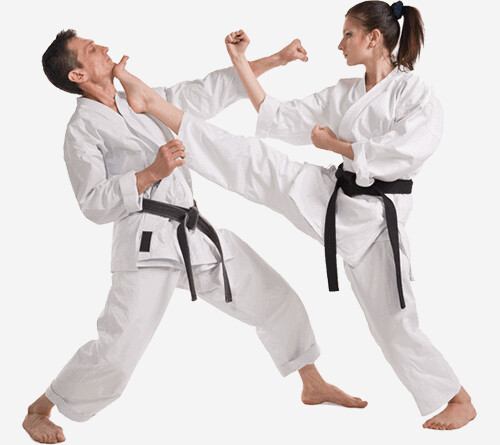
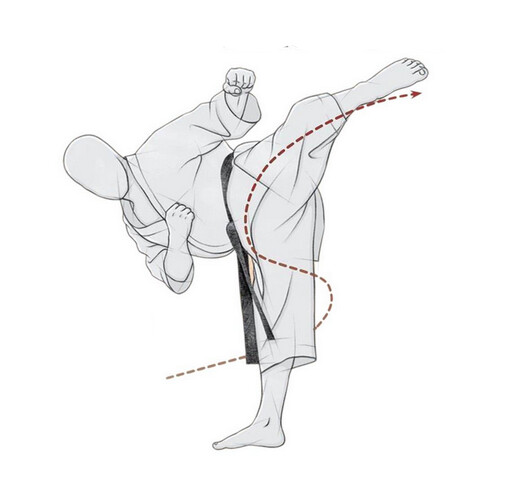
A side kick comes in two deadly variations.
The snap side kick is fast and sharp—a quick, rising strike driven by the knee.
The thrust side kick is its heavier cousin, a powerful, penetrating shot powered by the hips.

Both use the heel or the knife-edge of the foot as the striking surface, turning the leg into a battering ram. In self‑defense, the side kick is perfect for creating space, stopping an attacker cold by targeting the knee, thigh, or solar plexus before they ever reach you.