
See title. All ideas welcome (within reason)!
Social media mastery
1 Like
Ai utilisation + coming up with very captivating, bold and beyond surface scenarios or stories
1 Like
Please separate AI into its own stage if you guys decide to add it.
2 Likes
Some thoughts off the top of my head:
- Raikov modelling / ability for immersive study of other artist’s techniques to learn new skills and make them your own, with your own unique twist
- Flow state scripting - immerse yourself deeply in the creative process to focus on the process of translating creative vision into reality
- Some of the ideas from BL: ITW could be very relevant here
- Bring to light where limiting belief’s are hampering your creativity, appreciate the limitless potentials of the possible
- Meditation on or appreciation of beauty and form in the world around the artist to serve as inspiration or as a teacher.
- Mental transmutation: learn to use and direct emotions into the creative process like a pro, without burning out the nervous system.
4 Likes
Since I paint a lot:
-
Ability to remain rooted in your own practice
-
Unique creativity and trust in process
-
Intuitive colour selection and mixing
-
Raikov skill learning and modelling, Rembrandt style intuitive natural talent
-
Criticism of works slide off effortlessly, ability to block out the noise, ignore baseless accusations
-
Ability to profit from making works and to be selected for solo shows
-
Networking made easy, find your tribe wherever you are
-
Admin and other background stuff an artist has to do, done ready
3 Likes
Lot of struggling actor might find a multi stage to become actor helpful
Stage 1: Mastery and Learning over Auditioning, Networking in Industry, Self Tape and Film Making Process
Stage 2: Managing, Learning and improving acting/directing/producing skills through work you got on stage 1.
Stage 3: Managing Relations, Business and Wealth of acting/directing/producing career.
Stage 4: Innovating , Diversifying and Expanding the unique artistic work in different genres and style of film making.
2 Likes
-
Dedicated Flow, imagination, inspiration & Creativity stage that invokes action is a must imo. (Supposing a multi-stager)
-
Experimental Spiritual/energetic connection to Spirit of Art stage might be considered. To ensure work created is Transformational & Invokes some form of awakening.
-
Might involve stage/scripting about brain healing & enhancement… So higher creativity centers of the brain thrives.
2 Likes
Something like the New Inspiration/Creation Experience would be great.
One stage of Ultimate Artist as pure artistry would be cool: With monk mode, next to no social life, no social media and total focus on the project and what you might need for it til it’s done. As it might touch on more difficult aspects of artistic expression like obsession and perfectionism it should probably be an Artisan title. Vortexdive Crucible and Void of Creation would fit in well.
1 Like
Life as performance. The idea is a little rough, but this is beyond fame and into the territory of an identity level integration of life as a performance.
Think Salvador Dali, Connor McGregor, Prince, Lady Gaga, as some tip top examples.
People who’ve realized that all of life is a potential canvas for artistic expression.
People who blur the lines between performance and candor.
1 Like
Comprehensive English Version: Content for Subliminal Club Custom – "Renaissance Man: Artist"
Here is a fully revised, neutral version of the material for your Subliminal Club custom. All personalized elements have been removed. The content draws from master artists across Western traditions (with emphasis on the Italian Renaissance), Chinese literati painting and modern ink innovation, and key modern figures. It is structured for direct use in scripting affirmations, modules, or layered audio.
Each section includes historical and cultural context, concrete examples, nuances, edge cases, and implications for subconscious internalization and real-world artistic development.
1. Core Artistic Qualities and Traits
These foundational attributes define exceptional artists who achieve lasting impact. They form the identity layer of the subliminal.
- Possess Leonardo da Vinci’s insatiable curiosity, hyper-observational acuity, and polymath capacity to integrate art with anatomy, optics, engineering, and invention.
- Embody Michelangelo’s intense passion, perfectionism, and ability to convey raw emotional and physical power through the human form (evident in the Sistine Chapel ceiling’s dynamic figures and monumental scale).
- Channel Raphael’s grace, harmonious balance, and skill in synthesizing influences from predecessors into elegant, emotionally resonant compositions.
- Express profound inner emotion and vitality through color, brushwork, and form, as Vincent van Gogh did despite personal adversity.
- Demonstrate fearless innovation and prolific output while evolving styles, as Pablo Picasso did across Cubism and beyond.
- Transform ordinary subjects into profound, lively expressions of life force, as Qi Baishi achieved with shrimp, insects, flowers, and everyday motifs.
- Master bold synthesis of tradition and radical experimentation, as Zhang Daqian did through splashed-ink and splashed-color landscapes.
- Maintain extraordinary discipline, focus, and resilience, sustaining long-term creative output across decades.
Nuances and implications: These qualities are interconnected—curiosity fuels observation, passion drives technical mastery, and resilience sustains both. A key nuance is that true mastery often appears “effortless” only after years of deliberate practice. Edge case: Over-emphasizing any single trait (e.g., raw emotion without discipline) can lead to inconsistency. For subliminal work, reinforcing these as an integrated identity accelerates holistic development. Implication: Internalizing them supports original, culturally resonant work that transcends trends.
2. Mindsets and Psychological Traits
Drawn from psychological studies of creative genius and biographical patterns of master artists.
- Maintain a growth-oriented mindset of lifelong learning and continuous improvement (Michelangelo famously described himself as “always learning”).
- Cultivate radical openness to experience: deep curiosity, aesthetic sensitivity, and willingness to explore new ideas, cultures, and media.
- Develop robust resilience and persistence in the face of criticism, rejection, misunderstanding, and failure (van Gogh sold almost nothing during his lifetime; Qi Baishi achieved major recognition only later in life).
- Balance humility with quiet confidence: remain open to constructive feedback while trusting one’s unique vision.
- Treat art as a central life orientation—thinking about, planning, and executing creative work as a primary focus.
- Perceive the extraordinary within the ordinary and seek spiritual or emotional resonance beyond surface appearance.
- Commit to authentic emotional expression, transforming personal experience, philosophical insight, or social observation into visual form.
- Embrace experimentation and rule-breaking after deep internalization of tradition (Picasso’s Cubism; Zhang Daqian’s evolution from meticulous copying to abstraction).
Nuances and implications: Psychological research highlights high openness to experience as the strongest predictor of creative achievement, paired with achievement-oriented conscientiousness. Nuance: Introversion often supports solitary deep work, yet successful artists balance it with necessary external engagement. Edge case: Romanticizing suffering or instability can undermine long-term sustainability—true mastery favors healthy, enduring creative flow. Subliminal reinforcement of these mindsets rewires self-talk and emotional responses for greater creative consistency. Implication: These traits enable artists to sustain output, adapt across life stages, and contribute meaningfully over decades.
3. Observational and Intellectual Practices
The daily intellectual habits that build perceptual and conceptual depth.
- Practice meticulous, multi-sensory observation of nature, light, human anatomy, movement, and atmosphere (Leonardo’s extensive notebooks and dissections).
- Engage in regular direct drawing and recording from life and nature to train hand-eye-mind coordination.
- Study and copy masterworks from multiple traditions and eras to internalize principles before personalizing them.
- Maintain notebooks, journals, or idea systems for capturing observations, experiments, cross-disciplinary connections, and iterative thinking.
- Integrate philosophical, poetic, or scientific reflection with visual practice (Renaissance humanism; Chinese literati synthesis of painting, calligraphy, and poetry).
- Experiment systematically with new media, compositions, and conceptual approaches.
- Reflect regularly on completed work to refine perception of “likeness versus essence.”
Nuances and implications: All major artists across cultures engaged in extensive copying and study of predecessors—this is not imitation but deep internalization. Nuance: Observation is active and interpretive, not passive. Edge case: Over-reliance on copying without eventual synthesis leads to stagnation. For subliminal programming, these practices become automatic habits. Implication: Strong observational and intellectual foundations enable both technical excellence and original conceptual breakthroughs.
4. Western Artistic Techniques (Focus on Renaissance and Beyond)
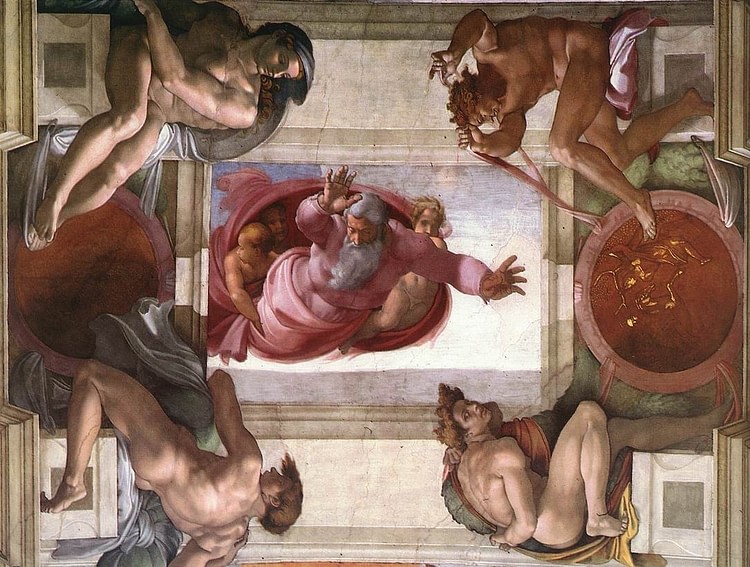
Michelangelo’s Sistine Chapel Ceiling - World History Encyclopedia
- Master sfumato (Leonardo’s signature innovation): soft, smoke-like blending of tones and colors without harsh lines or borders, creating atmospheric depth, subtle mood shifts, and imaginative space (most famously in the Mona Lisa’s enigmatic expression, achieved through layered glazes).
- Command chiaroscuro and tenebrism: dramatic contrasts of light and shadow to model form, create volume, direct focus, and heighten emotional intensity (perfected by Rembrandt and Caravaggio).
- Achieve precise anatomical understanding and dynamic figural expression (Michelangelo’s muscular power and torsion; Raphael’s graceful movement).
- Utilize layered oil painting, glazing, and optical mixing for luminosity and depth.
- Apply principles of proportion, perspective, and harmonious composition while knowing when to bend them.
Nuances and implications: Sfumato and chiaroscuro are often used together—strong contrast for structure, soft transitions for atmosphere and mystery. Nuance: These techniques serve emotional and narrative goals, not mere realism. Edge case: Over-application can produce stiffness; true mastery feels organic. Subliminal scripting can target automatic execution of these effects. Implication: Technical command frees the artist to focus on expression and innovation.
5. Chinese Literati Painting and Ink Techniques (Wenrenhua and Modern Developments)
Ink wash shrimps by Qi Baishi-China Story
- Embody the wenrenhua (literati painting) ideal: prioritize personal erudition, emotional expression, and “heart-mind imprint” over literal representation or decorative appeal (theoretical foundation by Su Shi and Dong Qichang; “Southern School” emphasis on subjective vision).
- Master xieyi (freehand/expressive) brushwork derived from calligraphy: capture spirit and rhythm rather than photographic likeness, following Qi Baishi’s principle that “painting is wonderful between likeness and unlikeness—too much likeness is vulgar; too little is deceit.”
- Command pomo (splashed ink) and pocai (splashed color) techniques, as innovated by Zhang Daqian: pour or splash ink, water, and mineral pigments onto paper, then guide the flowing forms with the brush to suggest mountains, mist, and landscapes—merging traditional ink methods with modern abstraction.
- Employ rich ink methods (dry/wet, concentrated/diluted, textural strokes, dots) and strategic use of negative space and emptiness.
- Work with symbolic subjects: landscapes as spiritual realms, flowers/birds/insects as celebrations of ordinary vitality, bamboo/rocks/plum as embodiments of character.
Nuances and implications: Chinese tradition emphasizes “qi” (vital energy) in the brushstroke and integration of the “three perfections” (painting, calligraphy, poetry), often with seals. Nuance: The “between likeness and unlikeness” principle avoids both kitsch realism and empty abstraction. Edge case: Pure formalism without emotional or philosophical grounding lacks resonance. Subliminal reinforcement supports fluid, expressive brush control and conceptual depth. Implication: These methods offer powerful alternatives or complements to Western optical approaches, enabling culturally hybrid work.
6. Innovation, Synthesis, and Expressive Dimensions
- Deeply internalize tradition from multiple cultures and eras, then innovate fearlessly (Picasso’s Cubism; Zhang Daqian’s splashed-color evolution).
- Synthesize East and West, ancient and modern: Western optical realism and light/shadow with Chinese expressive ink and conceptual resonance; traditional media with contemporary ideas.
- Transform inner experience, philosophical insight, and observation into works that evoke strong emotional and imaginative responses in viewers (sfumato’s suggestive mystery; Chinese “yi” or meaning beyond form).
- Maintain prolific creative output while allowing natural stylistic evolution across life stages.
- Balance personal authenticity with broader cultural or universal resonance.
Nuances and implications: Innovation without deep roots often lacks staying power; conversely, rigid traditionalism stifles vitality. Nuance: Effective synthesis respects the spirit of each tradition rather than superficial mixing. Edge case: Over-intellectualization can suppress intuitive flow. Subliminal work strengthens the subconscious bridge between study and original creation. Implication: Artists who master synthesis become cultural bridges, producing work with timeless and cross-cultural appeal.
7. Daily Habits and Practical Routines
- Establish consistent, protected blocks of studio time (examples range from Picasso’s long evening sessions to artists who work in focused morning blocks).
- Incorporate preparatory rituals: walks for inspiration, meditation or breathwork to enter creative flow, and simple routines that signal “creation time.”
- Practice daily fundamentals: calligraphy or drawing exercises to maintain brush control, dexterity, and sensitivity to energy in line.
- Build reflection and iteration cycles: regular review of work, experimentation logs, and openness to feedback.
- Balance intense solitary work with necessary external input (mentors, peers, or audience response) while protecting core creative energy.
- Support the body for sustained practice (posture, hand health, overall vitality).
Nuances and implications: Routines vary widely—some artists are night owls, others early risers—but consistency and ritual are near-universal among high achievers. Nuance: Discipline creates the container for inspiration and flow. Edge case: Rigid schedules without flexibility can block spontaneity; overly loose habits undermine output. Subliminal programming helps automate supportive routines. Implication: Sustainable daily practices compound into extraordinary long-term achievement.
8. Renaissance Polymath Integration
- Seamlessly integrate artistic practice with scientific observation, philosophical inquiry, engineering thinking, or other disciplines (Leonardo as archetype).
- Cultivate a mind like a Renaissance workshop: cross-pollination of ideas from multiple domains generates unique insights and solutions.
- Act as a cultural synthesizer: absorb the finest elements of global artistic heritage (Western Renaissance, Chinese literati and modern ink, and beyond) and forge personal, forward-looking expressions.
- Pursue art as a path of self-realization, emotional depth, intellectual growth, and contribution to human culture.
- Maintain long-term vision: create work that carries both technical excellence and deeper meaning.
Nuances and implications: The “Renaissance Man” ideal is not superficial breadth but profound integration where disciplines enrich one another. Nuance: In the contemporary world, this often manifests as thoughtful East-West or traditional-contemporary dialogue. Edge case: Shallow eclecticism lacks depth; true polymathy requires serious mastery in chosen areas. Subliminal reinforcement supports the subconscious connections that fuel integrative creativity. Implication: Artists operating at this level produce work with lasting intellectual, emotional, and cultural significance.
Overall Guidance for Scripting and Use Organize the material into layered modules typical of Subliminal Club customs:
- Identity and qualities layer
- Mindset and psychological layer
- Technical mastery layer (Western + Chinese techniques)
- Practice and habit automation layer
- Synthesis and outcome layer
Phrase statements in present-tense, first-person, sensory-rich language. Combine with deliberate real-world practice (daily drawing, copying masters, experimentation) for optimal results.
Key Overarching Nuances
- Deep study of tradition precedes and enables genuine innovation.
- Balance “likeness and unlikeness,” optical realism and expressive spirit, discipline and flow.
- Healthy psychological resilience outperforms romanticized suffering.
- East-West synthesis works best when each tradition’s core spirit is respected.
- Technical skill serves expression and meaning, not the reverse.
This version is self-contained, globally balanced, and optimized for subliminal internalization while remaining practical for conscious artistic development. It covers qualities, mindsets, techniques, and practices with sufficient depth, examples, and nuance to support comprehensive subconscious reprogramming.
1 Like
Here is one that is closer to modern art:
Core Artistic Qualities and Traits
These define artists who redefined what art can be in the modern age.
- Fearlessly break conventions and redefine artistic boundaries (Picasso’s Cubism fractured perspective; Duchamp’s readymades questioned the very definition of art).
- Generate powerful ideas and concepts that drive the work, often prioritizing concept over traditional craft or beauty.
- Embrace radical experimentation with new materials, media, and processes (Pollock’s drip technique, Warhol’s silkscreen, Kusama’s immersive installations).
- Transform personal psychology, obsession, or inner vision into universal visual languages (Kusama’s polka dots and infinity rooms as both personal catharsis and shared experience).
- Engage directly with society, politics, consumerism, and current events through provocative or satirical commentary (Banksy’s street interventions; Ai Weiwei’s activist installations and ready-mades).
- Master repetition, seriality, and branding as artistic strategies (Warhol’s repeated celebrity images and consumer products; Kusama’s obsessive dot patterns).
- Demonstrate resilience and adaptability in the face of criticism, censorship, commercialization, or institutional rejection.
- Blend high art with popular culture, mass media, and everyday objects while maintaining conceptual depth.
Nuances and implications: Modern art often values the idea and context as much as (or more than) technical execution. Nuance: Technical skill remains valuable but is frequently subordinated to conceptual rigor or emotional impact. Edge case: Over-emphasis on shock or novelty without substance leads to ephemeral work. For subliminal development, these traits support bold, idea-led creation that resonates in a fast-changing world. Implication: Artists embodying these qualities produce culturally relevant, often influential work that challenges and expands public perception of art.
2. Mindsets and Psychological Traits
Modern artists frequently operate with heightened conceptual awareness and psychological intensity.
- Question authority, tradition, and institutional norms as a core creative impulse.
- Prioritize idea generation and conceptual clarity — viewing the artwork as the physical manifestation of an idea (core to Conceptual Art).
- Explore and externalize the subconscious, dreams, obsession, or mental states (Surrealism’s dream logic; Kusama’s use of art to manage hallucinations and anxiety).
- Maintain provocative or contrarian thinking that challenges viewers and society (Banksy’s dark humor and political satire; Ai Weiwei’s direct confrontation with power).
- Balance personal authenticity with strategic self-presentation or branding (Warhol’s Factory persona and media engagement; Dalí’s cultivated eccentricity).
- Cultivate resilience against rejection, misunderstanding, or commercial pressures while staying true to vision.
- Embrace playfulness, absurdity, and rule-breaking as serious artistic strategies.
- View art as a tool for social commentary, activism, or cultural critique alongside personal expression.
Nuances and implications: Many modern artists turned psychological challenges into creative fuel rather than obstacles. Nuance: Mental health struggles appear frequently in biographies but are not romanticized here — subliminal work can support healthy expression and resilience. Edge case: Pure provocation without depth risks becoming spectacle. These mindsets, when internalized, enable artists to navigate the contemporary art world’s complexities (market, institutions, audience) while producing meaningful work.
3. Observational, Intellectual, and Conceptual Practices
Modern practice shifts emphasis toward ideas, research, and cultural engagement.
- Conduct deep research into current events, philosophy, politics, science, technology, and popular culture to fuel concepts.
- Maintain extensive idea journals, sketchbooks, or digital archives for capturing concepts, experiments, and iterations.
- Engage in systematic experimentation with materials, processes, and contexts rather than perfecting a single style.
- Study and appropriate elements from mass media, consumer culture, history, or other artists, then transform them (Warhol’s silkscreens; Picasso’s collage influences).
- Use documentation (photography, video, writing) as an integral part of the artistic process and presentation.
- Test ideas through public intervention, performance, or audience interaction (street art, happenings, installations).
- Reflect critically on the role of art in society and the artist’s position within cultural power structures.
Nuances and implications: Observation in modern art often includes cultural and media landscapes as much as the natural world. Nuance: Conceptual depth requires intellectual rigor alongside intuition. Edge case: Over-intellectualization can disconnect from emotional or sensory impact. Subliminal reinforcement helps automate idea generation and research habits. Implication: These practices produce timely, contextually rich work that engages contemporary audiences.
4. Key Modern and Contemporary Techniques
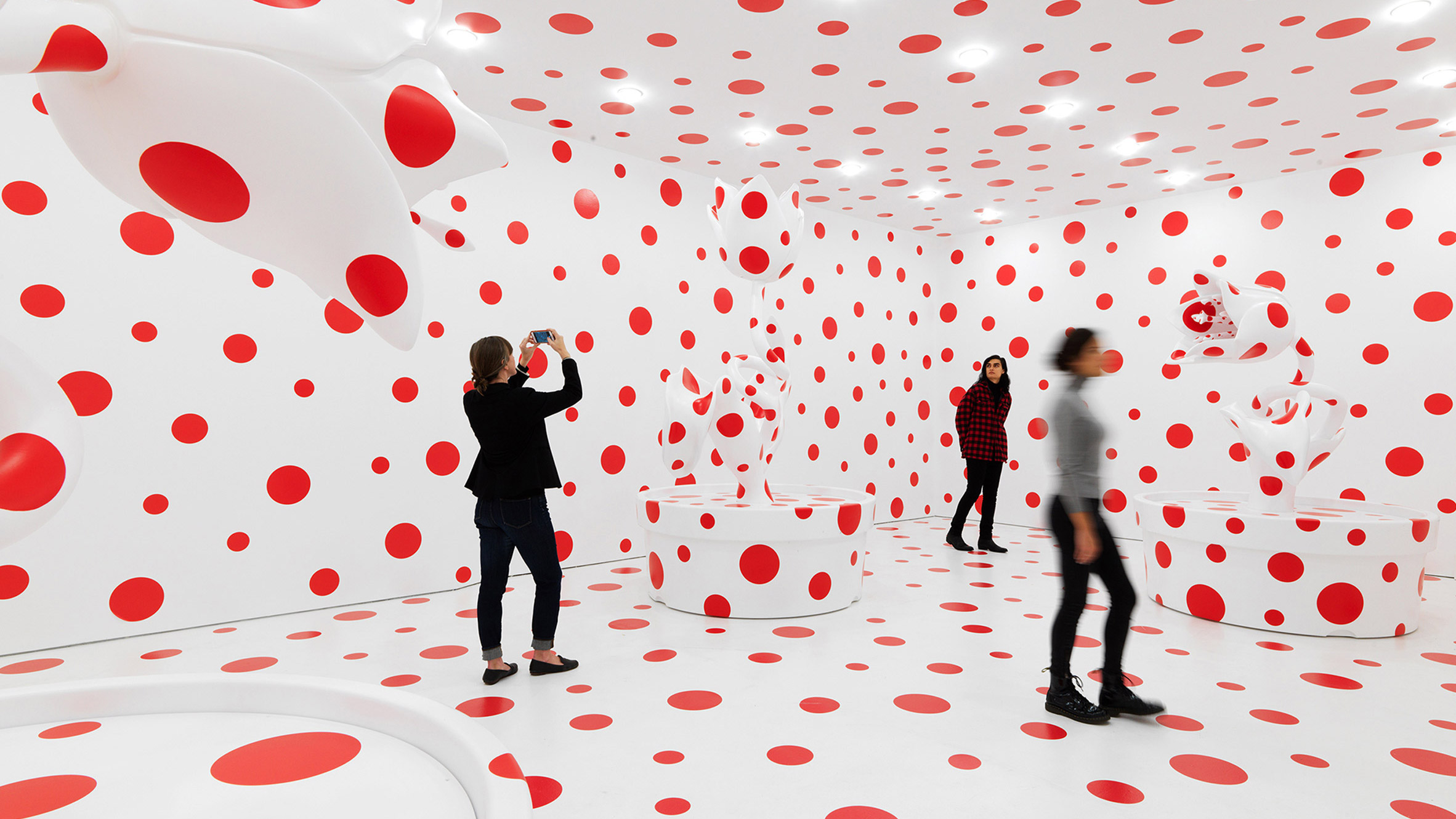
Yayoi Kusama’s mirror rooms and polka-dot installations come to New York
- Action painting and gestural abstraction (Pollock): Drip, pour, and flung paint to emphasize process, energy, and the artist’s physical presence as part of the work.
- Readymades and found objects (Duchamp, later Ai Weiwei): Elevate everyday or manufactured items into art through context, selection, or minimal intervention, challenging notions of authorship and value.
- Collage, assemblage, and appropriation: Combine disparate images, objects, or media to create new meanings (Picasso, Warhol, contemporary remix culture).
- Silkscreen, printing, and serial reproduction (Warhol): Use mechanical reproduction to explore themes of celebrity, consumerism, and mass culture while embracing repetition.
- Installation and immersive environments: Transform entire spaces with objects, light, sound, or mirrors to create experiential, site-specific works (Kusama’s Infinity Rooms).
- Performance, happenings, and body-based work: Use the artist’s body or live actions as medium, often ephemeral or documented.
- Street art and public intervention (Banksy): Stencil, spray paint, and site-specific actions in urban environments for direct social commentary and accessibility.
- Conceptual strategies: Text, instructions, documentation, or minimal objects where the idea itself is the primary artwork.
Nuances and implications: Many techniques deliberately subvert traditional painting or sculpture. Nuance: Even highly conceptual artists often retain sophisticated understanding of materials and presentation. Edge case: Over-reliance on novelty or technology without conceptual grounding produces shallow results. These techniques expand the definition of art and audience experience.
5. Innovation, Provocation, and Social Synthesis
- Generate original concepts that respond to or critique contemporary society, technology, politics, and culture.
- Synthesize global influences, popular culture, and historical references into new forms (Warhol’s American consumer icons; Ai Weiwei’s fusion of Chinese tradition with Western conceptualism and activism).
- Use provocation, humor, or shock strategically to engage audiences and spark dialogue (Banksy; Dalí’s surreal juxtapositions).
- Balance commercial success with artistic integrity or use commercial strategies ironically/critically (Warhol embraced commerce; many others critique it).
- Create series and bodies of work that explore a single idea across multiple iterations and media.
- Engage with new technologies and media (video, digital, social media, AI-assisted processes in contemporary practice).
Nuances and implications: Modern innovation often involves cultural critique or recontextualization rather than purely formal invention. Nuance: Effective provocation requires timing, context, and substance to avoid mere sensationalism. Edge case: Excessive focus on market trends can compromise authenticity. Subliminal support strengthens fearless conceptual thinking and cultural awareness. Implication: Artists who master this create work with both artistic and societal resonance.
6. Daily Habits and Studio Practices
- Maintain flexible yet consistent studio time dedicated to experimentation and idea development.
- Engage regularly with news, culture, philosophy, and current events as creative input.
- Document process extensively (photos, videos, notes) for both personal reflection and potential presentation.
- Test ideas through quick prototypes, sketches, or small experiments before scaling to major works.
- Balance solitary studio work with public engagement, collaboration, or site visits.
- Develop personal rituals or systems for entering creative flow and managing the psychological demands of boundary-pushing work.
- Archive and organize past work and ideas for future reference or series development.
Nuances and implications: Modern studio practice is often more research- and concept-driven than purely technical. Nuance: Flexibility is essential because projects can range from intimate studio pieces to large public installations. Edge case: Over-documentation or external pressure can interfere with authentic process. These habits support sustainable, idea-rich production.
7. Modern Polymath Integration (“Renaissance” Updated for Today)
- Integrate art with activism, social commentary, technology, science, media, or other disciplines (Ai Weiwei’s art-activism; artists working in bio-art, digital media, or environmental projects).
- Think across boundaries: high/low culture, art/life, physical/digital, local/global.
- Use art as a platform for exploring identity, power structures, mental health, consumerism, and global issues.
- Adapt rapidly to new tools, platforms, and cultural shifts while maintaining a coherent personal vision.
- Create work that functions on multiple levels — aesthetic, conceptual, emotional, and social.
- Position the artist as thinker, provocateur, documentarian, and cultural participant simultaneously.
Nuances and implications: The modern “Renaissance Artist” is interdisciplinary by necessity in a complex, connected world. Nuance: Breadth must be paired with depth in chosen areas to avoid superficiality. Edge case: Over-extension across too many fields dilutes impact. Internalizing this supports versatile, impactful creative careers.
Scripting and Implementation Guidance Organize into layers suited to modern practice:
- Identity & Vision (fearless idea generator, boundary-pusher, cultural engager)
- Conceptual & Psychological (idea primacy, resilience, subconscious exploration)
- Technical & Media (mastery of readymades, installation, appropriation, process-based methods)
- Habit & Process (research, experimentation, documentation, flow)
- Outcomes (culturally resonant, provocative yet substantive work with personal and social impact)
Use present-tense, affirmative language focused on modern realities: idea generation, experimentation with new media, engagement with contemporary issues, and resilience in a commercialized art world.
2 Likes
Stage dedicated to networking, ability to make a profit as an artist, fame
1 Like
I would encourage you to look for ideas in this book:
How to Think Like Leonardo da Vinci: Seven Steps to Genius Every Day by Michael J. Gelb
1 Like
I would also think the concept of industry disruption should be some where in this title. Akin concepts like innovation, shaking things up, turning things upside down, thinking outside of the box, etc.
1 Like
finding ways to do creative work in ways that feel good. As process alone. Instead of feeling consumed by it and like we are wasting our life time away in pursuit of something we dont feel we chose to be compelled to do to begin with.
finding loopholes to make process always more efficient and faster so we dont have to spend months doing something that can be done within a week by someone else.
fame and media recognition - easy flow of our work into todays best and most captivating standards - masterful packaging and ideas that sync with new “trends” such as video work that is being pushed by algorythms
attraction of enthusiastic long term “patrons” and returning customers
each piece we make is that of value of 10 pieces on average we would make prior - resulting in great reach from less posts that soak with value and spirit
procrastination remover
intuitive guide to make something far better followed by joyful recognition and systematic utilization of learnt improvements in future on auto pilot
shattering emotion - overwhelming emotional effect of our choice that captures the audience and makes them feel what we intent them to through the art as well and as intensely as we want
break out of frame - forget the standard for stories and norms that are accepted and finally tell the stories you have lurking in the back of your mind when you are by yourself - people are starved for something wild and unapologetic - ignore the shushers
story teller - Literally just be able to tell really really unique and unforgettable stories. I cant stress this one enough. We need to think more of what will happen rather than just making surface level untold stuff because we cant think of captivating storyline. Something that makes the person glued to the screen from the moment they see it till the story is over or they run our of content commenting if they can find more of it somewhere else
As I was reading this thread, I kept thinking about Dada, the anti-art. It was the inception for probably many things that happened afterwards.
Some people were just sick of the same things over and over, so they shook things up.
What if RM: Ultimate Artist could create thousands of modern day Dada-ist, so to speak.
3 Likes
And we really need a Neo-Dada movement today.
Postmodernism is asking for it.
2 Likes
Ability to focus & direct intuition on your projects and finish them instead of drifting around/noodling aimlessly.
This will be also helpful for people working with multiple art branches.
1 Like
Ok, ok… got a crazy idea.
It’s about distinguishing RM & UA problem.
How about instead of adding UA to RM line add Ultimate Artist into EoG line?
Shift all that career, building systems for making money & finance ect. focus into Creativity & Art.
While keeping your art unadulterated/uncompromised.
1 Like